Smart control from the valve to the root zone. AgroKh brings valve installation, irrigation controllers, LoRa field communication, cellular connectivity, sprinklers, and soil-moisture sensing together for farms, orchards, nurseries, and landscaped sites in Cambodia and Southeast Asia.
Control each watering zone with a schedule or a moisture-based rule, check equipment status, and manage irrigation from a connected dashboard. We plan the pipework, controls, sensors, and communications around the water supply, crop needs, and conditions at your site.
Valve Installation & Zone Control
Reliable automation starts with a correctly installed valve assembly. We select compatible solenoid or motorized valves, fit isolation valves and filters, and connect each irrigation zone to its controller. Valve boxes and serviceable fittings help protect equipment and simplify maintenance.
Valve sizing matched to available flow and pressure
Manifolds, pipe connections, isolation points, and filtration
Controller wiring or wireless field-node installation
Open/close checks, leak testing, and manual override
Pump sequencing and protection where the installation supports it
Irrigation Controllers & Local Automation
Choose a controller that suits the site: a wired panel for nearby zones or distributed field controllers for more spread-out installations. Configure watering days, run times, zone sequencing, and maximum watering durations. Suitable power supplies, weather-resistant enclosures, and surge protection are considered during installation.
LoRa, GPRS & IoT Remote Management
LoRa: low-power radio links connect compatible field controllers and sensors across the site. Antenna placement and coverage are checked during the site survey; range depends on terrain, obstructions, and equipment.
GPRS / cellular: a compatible modem or gateway provides internet backhaul for remote access. GPRS is an option only where the local operator still supports it; LTE/4G equipment can be selected where appropriate.
IoT dashboard: view sensor readings, change supported schedules, check zone status, and receive configured equipment alerts from a phone or computer.
Local operation: controller-based schedules and safety rules can continue during an internet outage when supported by the selected hardware. Remote commands and alerts need a working connection.
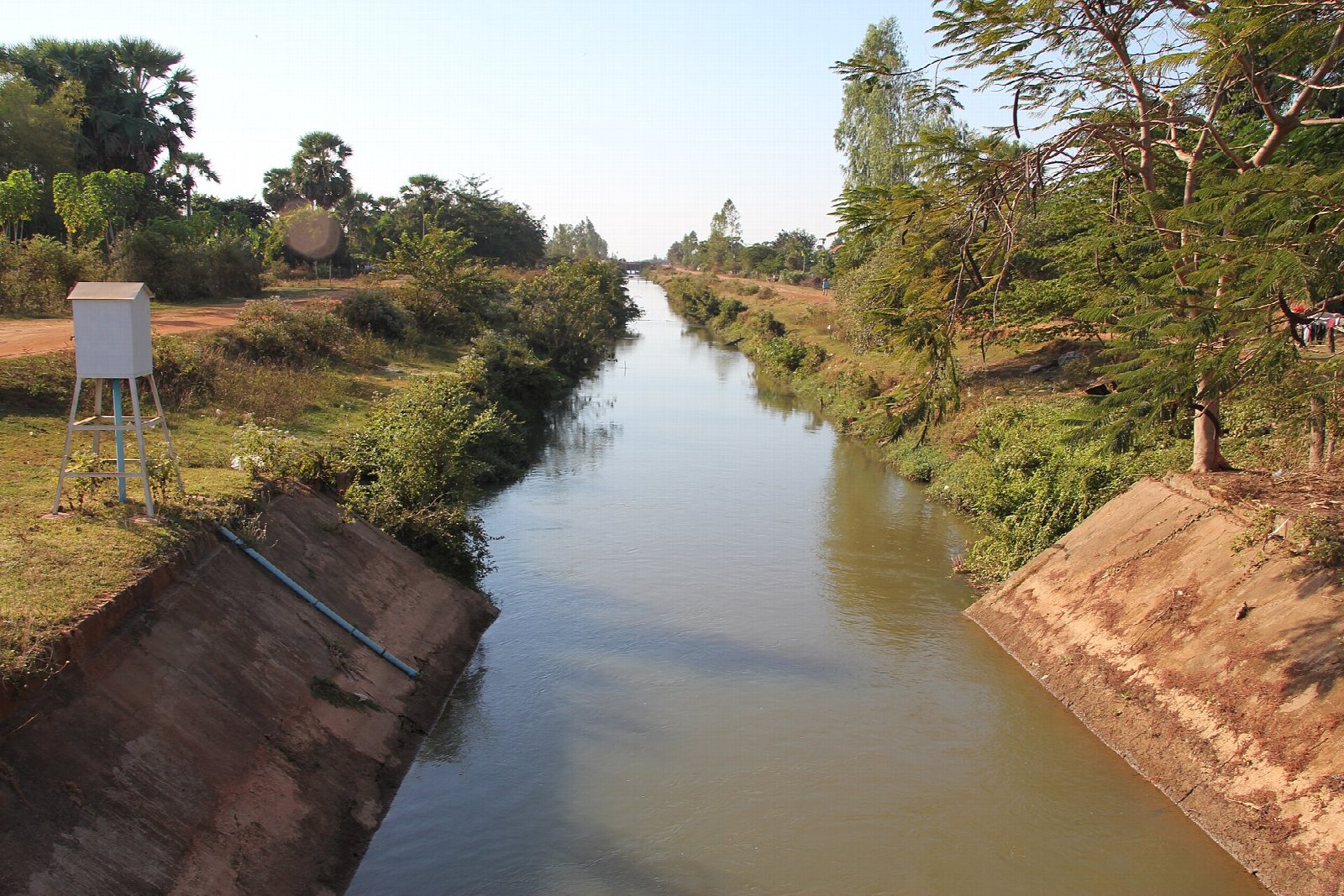
Remote irrigation water-level monitoring in Cambodia. Photo: Chris Graham/AusAID, DFAT, CC BY 2.0.
Soil-Moisture Sensor Installation
Install soil-moisture probes at representative root depths in each growing zone. We check placement, compare readings with actual soil conditions, and set watering thresholds for the soil and crop. Different zones can use different settings.
Moisture-based control can pause watering when the soil is already wet, start irrigation when a configured threshold is reached, and stop at the target condition or maximum run time. Flow, tank-level, and pressure inputs can be added to support fault detection and pump protection.
Sprinkler Installation & Water Distribution
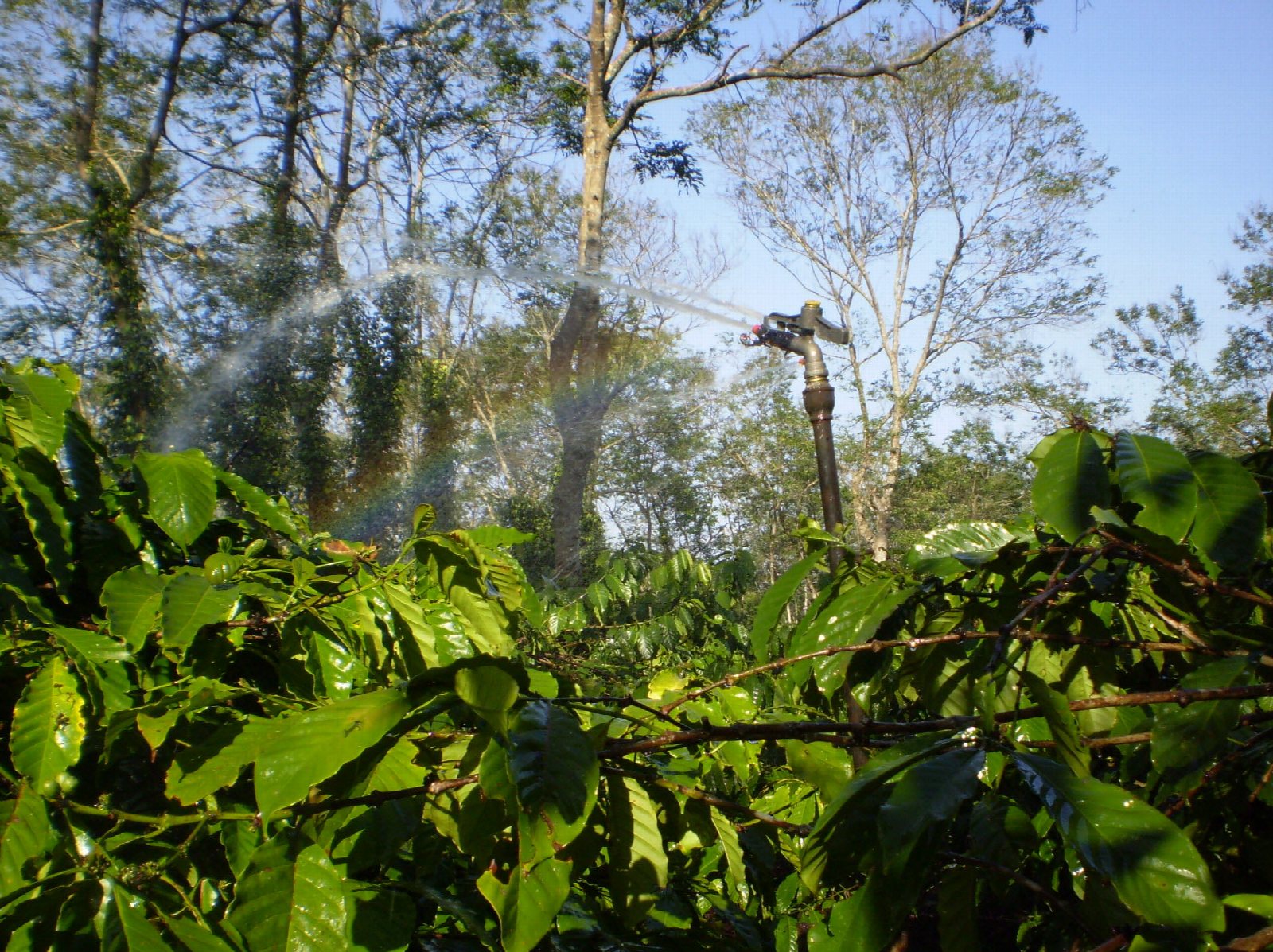
We lay out and install sprinklers or micro-sprinklers to suit the planted area, spacing, pressure, and available water flow. Separate zones help manage different crops, lawn areas, and beds without applying the same watering pattern everywhere.
Commissioning includes flushing pipework, checking nozzle operation, adjusting spray coverage, and testing pressure and flow across the working zones. Drip lines can be integrated where watering at the root zone is more suitable.
From Site Survey to Working Irrigation
Survey: inspect the water supply, pipe routes, soil, planting zones, power, radio coverage, and cellular reception.
Design: select valves, controllers, sprinklers, sensors, and connectivity for the required zones.
Install: fit pipework and valves, mount controllers, place sensors, and connect the communications equipment.
Commission: test leaks, flow, valve response, moisture rules, remote access, and supported outage behavior.
Handover: explain schedules, manual operation, maintenance, and troubleshooting.
Frequently Asked Questions
Can existing valves and sprinklers be connected?
Often, yes. We first check valve voltage, actuator type, pump capacity, pressure, wiring, and controller compatibility.
Do LoRa controllers need a SIM card in every zone?
Typically, LoRa field devices communicate with a central receiver or gateway. If cellular backhaul is selected, the modem or gateway needs the SIM and data connection; every field device does not normally need its own SIM.
Can soil-moisture sensors control watering automatically?
Yes, with a compatible controller. Thresholds, target moisture, and maximum run times are set for each zone and checked during commissioning.
Can I operate a valve manually?
Manual operation and local override can be provided according to the selected valve and controller, with clear instructions during handover.


.jpg)